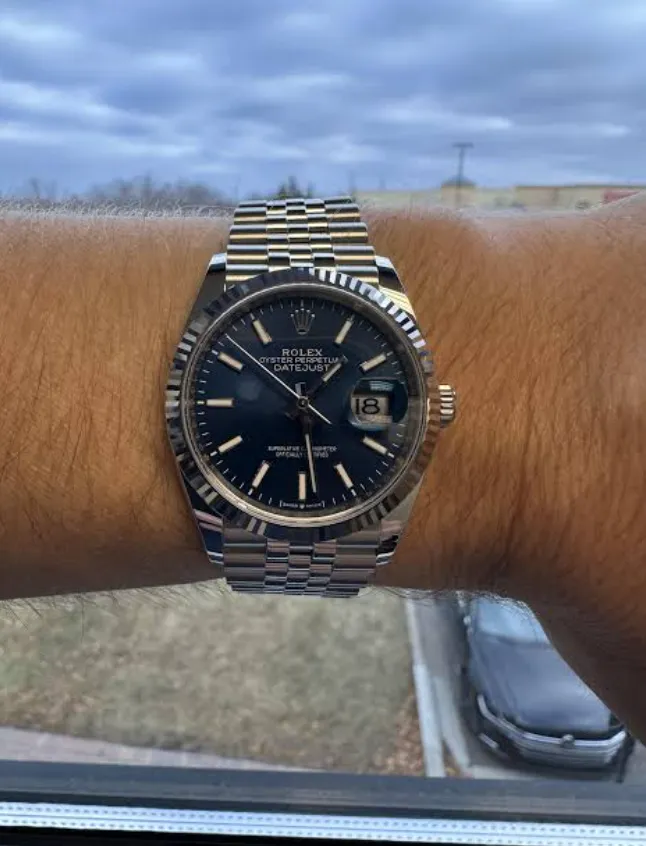
Walk into a Rolex authorized dealer today and ask for a steel Daytona. You already know how that conversation ends. The sales associate will be polite. They might suggest you join a list. They will not have the watch. And depending on how long you have been a customer, they may not offer you one for years.
This is not an anomaly. It is the standard experience for anyone chasing the most desirable references from Rolex, Patek Philippe, or Audemars Piguet right now. The authorized dealer model, for all its prestige and polish, has structurally failed a large segment of serious buyers. And the pre-owned secondary market, once treated as a fallback option, has quietly evolved into something objectively better for most people trying to acquire a watch they actually want.
That is a bold claim. It deserves a proper argument.
The Allocation Problem Is Not Going Away
The scarcity of certain references at authorized dealers is not a temporary supply chain issue. It is a deliberate strategy. Brands like Rolex control production volumes carefully, and they distribute their most coveted pieces through an opaque allocation system that rewards relationship history, boutique spending, and loyalty purchases.
What this means in practice is that a first-time buyer, or even a buyer who has spent significantly with a dealer, can wait three to seven years for a steel sports reference with genuine demand. The Patek Philippe Nautilus 5711 had waitlists exceeding a decade before it was discontinued. The AP Royal Oak 15500 sits in similar territory.
For buyers who want a specific reference now, or even within a reasonable timeframe, the authorized dealer route is simply not a viable path.
Waitlists Are Not Queues. They Are Gatekeeping Mechanisms.
There is a perception that an authorized dealer waitlist functions like a queue: you put your name down, and eventually your turn comes. That is not how most of them work.
Allocation at many ADs is tied to what the industry calls “client development,” which is a polished way of saying the dealer expects you to buy other things first. Strap purchases, accessory add-ons, less desirable references. The expectation is that you build a purchase history before the dealer considers you for a steel sports watch.
This model works for some collectors. For buyers who are not interested in acquiring watches they did not ask for, it is frustrating at best and insulting at worst. You are being asked to pay a loyalty tax for the right to eventually spend a significant sum on something you wanted in the first place.
The secondary market does not require this. You identify the reference, verify the piece, agree on a price, and the watch is yours.
The Authorized Dealer Premium Is Real, and It Cuts Both Ways
There is a common assumption that buying from an authorized dealer means paying retail, and retail is always the fair price. This is worth examining more carefully.
For a Rolex Submariner Date with a current retail price around $10,000 USD, the secondary market value often sits meaningfully above retail, sometimes between $13,000 and $18,000 depending on condition, papers, and market timing. This is not a flaw in the secondary market. It reflects actual demand. Retail pricing for these references is artificially suppressed relative to what the market will bear, precisely because the brands restrict supply.
When you do manage to acquire one at retail through an AD, you are not getting a deal. You are getting access, and often only after a significant investment of time and ancillary spending. The secondary market prices in that access cost openly and honestly. What you see is what it costs to actually own the watch.
The Stigma Around Pre-Owned No Longer Reflects Reality
For years, buying pre-owned carried a real risk. The counterfeit problem in the luxury watch space is legitimate, documented, and ongoing. Swiss watchmaker associations and independent authentication bodies have long flagged the sophistication of replica movements and dials. For uninformed buyers, the online grey market represented genuine danger.
That risk profile has changed significantly as a tier of serious, professionally operated pre-owned dealers has matured. Authentication standards, transparent condition grading, provenance documentation, and buyer protection have become competitive differentiators rather than optional extras.
Platforms and dealers at the top of this market now operate with a level of rigor that rivals, and in some respects exceeds, the due diligence applied at authorized retail. Reputable operations stake their entire reputation on getting authentication right. A single high-profile error would be catastrophic for their business in a way that a single misstep at a multi-brand AD simply would not be.
The result is that a collector working with a trusted pre-owned specialist is not compromising. They are often getting a more thoroughly vetted piece than they would receive through standard retail channels, where the assumption of authenticity is built into the brand relationship rather than independently verified.
Access at the Top of the Market Requires a Different Kind of Partner
This is where the conversation gets specific. The watches that are hardest to find, the F.P. Journe Astronomic Souveraine, the Greubel Forsey Tourbillon 24 Secondes, the Richard Mille RM 27 series, are not sitting in display cases anywhere. They surface through networks, relationships, and sourcing operations that operate entirely outside the authorized retail world.
For buyers in this tier, the secondary market is not an alternative to the AD experience. It is the only realistic route. Independent watchmakers at this level produce in very limited numbers, and pieces exchange hands through specialist dealers who understand what they are handling.
This is the environment where Wrist Aficionado operates. Their inventory spans the established holy trinity alongside independents and GPHG-tier makers that most buyers would struggle to access anywhere else.
What Reputable Pre-Owned Dealers Now Offer That ADs Cannot
The authorized dealer relationship has genuine advantages. Manufacturer warranty continuity, a retail environment with brand investment behind it, and a direct relationship with the brand’s service infrastructure. These are real.
But the pre-owned specialist, when operating at the right level, offers something different and in several ways more valuable.
- Complete inventory transparency. Condition, provenance, service history, and dial originality are documented in detail because buyers require it. This information is not always surfaced proactively in an AD environment.
- Access to discontinued references. The Patek 5711 is gone from retail forever. The grey dial Nautilus, the most desired variant, lives only in the secondary market now.
- No purchase prerequisites. There is no strap purchase, no loyalty calendar, no relationship tax. You find the watch, you buy the watch.
- Market-reflective pricing. Prices reflect actual demand, not an artificial retail floor. For a buyer who understands value, this is more honest than retail pricing that ignores secondary market premiums.
- Sourcing on request. Established dealers with global sourcing networks can locate specific references that are not in their current inventory, an option that simply does not exist at an AD.
The Wrist Aficionado watches collection reflects this model in practice, with inventory covering hard-to-find references across Rolex, Patek Philippe, Audemars Piguet, Richard Mille, and a deep roster of independent makers.
The Remote Buying Barrier Has Largely Been Solved
One objection to the pre-owned market that held weight a decade ago was the difficulty of buying remotely. Spending five or six figures on a watch you could not physically inspect was a reasonable concern.
The combination of high-resolution imaging standards, independent third-party authentication, fast insured shipping with full coverage, and boutique appointment options has largely dissolved this barrier. Buyers who want to see a piece in person before committing can now do that with leading dealers who operate physical locations. Those comfortable with remote purchase have access to documentation and imaging that makes condition assessment genuinely reliable.
This matters because it levels the geographic playing field. A collector in Tokyo, Melbourne, or Dubai is no longer dependent on their local AD network for access to the most sought-after references.
Key Takeaways
- Allocation scarcity at authorized dealers is structural and deliberate, not temporary. For most desirable references, waiting at an AD is not a realistic acquisition strategy.
- Waitlists at many authorized dealers function as gatekeeping mechanisms tied to prior spending, not simple queues.
- Secondary market pricing reflects real demand honestly. Retail prices for high-demand references are artificially suppressed and come with hidden costs in time and ancillary purchases.
- Reputable pre-owned specialists have raised authentication and condition transparency to a level that matches or exceeds the assumptions built into authorized retail.
- Access to discontinued references, independent watch brands, and limited production pieces is only possible through the secondary market.
Frequently Asked Questions
Is buying pre-owned always riskier than buying from an authorized dealer?
Not with the right dealer. The counterfeiting risk that historically made pre-owned purchases concerning is real, but it is mitigated significantly when you work with a specialist who applies rigorous authentication standards. The assumption of authenticity at an AD is based on the brand relationship; at a serious pre-owned dealer, it is independently verified.
Why are prices higher in the secondary market for watches available at retail?
Secondary market prices reflect actual demand. For references like the Rolex Daytona or Patek Nautilus, retail pricing is set below what the market would naturally price them at, because the brands control supply carefully. The premium you pay on the secondary market is the real cost of access, made visible and honest.
Can pre-owned dealers actually source watches that are not in their current inventory?
The best ones can. Dealers with established global sourcing networks can locate specific references on request, which is particularly valuable for collectors chasing a precise reference or configuration that is not commonly available.
What happened to the Patek Philippe 5711, and can I still buy one?
Patek discontinued the reference 5711 in 2021. It is no longer available through authorized dealers. The only way to acquire one now is through the secondary market, where demand has pushed prices well above the last known retail price.
Is the boutique experience at a pre-owned specialist comparable to an authorized dealer?
At the higher end of the pre-owned market, yes. Dealers operating in luxury hotel environments and flagship retail locations in cities like New York, Miami, and Beverly Hills offer an experience that matches the authorized dealer in terms of environment and service, while offering broader inventory access and fewer purchase conditions.
Conclusion
The narrative that buying pre-owned is somehow a compromise belongs to an earlier era. For serious collectors chasing specific references, the secondary market is not a fallback. It is the most direct, transparent, and often the only viable route to the watches that matter most.
The authorized dealer model still works for buyers happy to wait, willing to build a relationship on the AD’s terms, and satisfied with what is on the shelf. For everyone else, the pre-owned market has matured into something genuinely better, not because retail failed, but because the secondary tier rose to meet demand that retail never could.
If you want the watch you actually want, on a timeline that makes sense, the secondary market is where that conversation starts.