If you’ve ever had to keep moving your chair to stay in the shade, or seen some guests baking in the sun while others sit comfortably, you’re dealing with uneven shade. Many people have this problem. A simple, stylish, and very effective answer is triangular sails from Shade4You.
These fabric panels, stretched tightly between three fixed points, give targeted shade and turn outdoor areas into comfortable, welcoming spaces. Their shape makes them very flexible, so they can cover awkward sunny spots that standard shade options often leave exposed.
What Causes Uneven Shade Coverage in Outdoor Spaces?
Uneven shade is a common issue for homeowners and businesses trying to get the most out of their outdoor areas. It usually comes from two main factors: the sun keeps moving across the sky, and most traditional shade products stay in one place and don’t adjust.
A fixed umbrella or awning can’t follow the changing sun angles, so you end up with bright hot patches and areas that don’t get enough protection.
This isn’t just annoying; it can strongly reduce how often and how long you can use your patio, deck, or garden. You might host a barbecue where half the guests are fine, while the rest have to shuffle around constantly to avoid the glare. This patchy shade makes the space feel less inviting, shortens the hours it is comfortable to use, and can increase health risks from long UV exposure.
Common Problems with Traditional Shade Solutions
Older shade options do help, but they often fall short when you want wide and flexible coverage. Umbrellas give a small round area of shade that moves away as the sun moves, so you have to reposition them again and again. They can be heavy to move, may tip over in the wind, and usually don’t add much style beyond basic use.
Awnings are more solid but fixed in one position. They shade only a set area, leaving nearby spots exposed as the sun shifts. They also tend to cost more and often need more complicated installation.
These systems also have trouble with spaces that are irregular in shape or get sun from more than one direction. Their rigid layout makes it hard to shade different zones with different needs, for example separating a dining area from a sunbathing or play area.
The result is often too much shade in some places, blocking natural light and fresh air, and too little in others, which defeats the purpose of having shade at all.
How Uneven Shade Impacts Comfort and Usability
Uneven shade affects more than comfort. It can make parts of an outdoor space unusable during the hottest hours. A nice lounge area might be perfect in the morning but become a “sun oven” at midday, forcing people indoors. A dining table in full sun makes mealtimes less pleasant. For restaurants and cafés, customers may avoid hot outdoor seating altogether, meaning lost income.
Health-wise, patchy shade increases the risk of sunburn and long-term UV damage. Even in partial shade, reflected light can still harm the skin. Constantly moving around to escape the sun also breaks the calm, relaxed feeling you want outside, making people feel restless and irritated instead of peaceful.
How Do Triangular Shade Sails Address Uneven Shade Coverage?
Triangular shade sails are becoming more popular because they deal with uneven shade very effectively. Their three-sided shape and flexible setup make it easy to adjust them to the sun’s path and to the layout of your outdoor area. This gives focused and adjustable shade that standard umbrellas and fixed awnings can’t match.
Compared with square or rectangular sails, triangles offer a more dynamic look that suits modern homes and commercial spaces, while still being very practical. They work with the outdoor environment by directing light and shade exactly where you need it, improving both comfort and appearance.
Unique Shape Provides Targeted and Adjustable Shade
The triangle shape is what gives these sails their strength and flexibility. With only three fixing points, you can angle and tighten a triangular sail so it blocks sunlight from a chosen direction. That makes it easy to shade specific areas such as a sofa set, a dining table, or a kids’ play zone without darkening the whole patio. This way, the main spots you use are protected, while other parts still enjoy natural light and fresh air, so the area does not feel boxed in.
You can also change the height and angle of each corner. This gives you a high level of control. As the sun moves, you can adjust the sail or its fittings to keep good shade across the day. Instead of a fixed shade pattern, you get a moving shade solution that you can fine-tune for the time of day, the season, and the way you’re using the space.
Effective Overlapping for Maximum Sun Protection
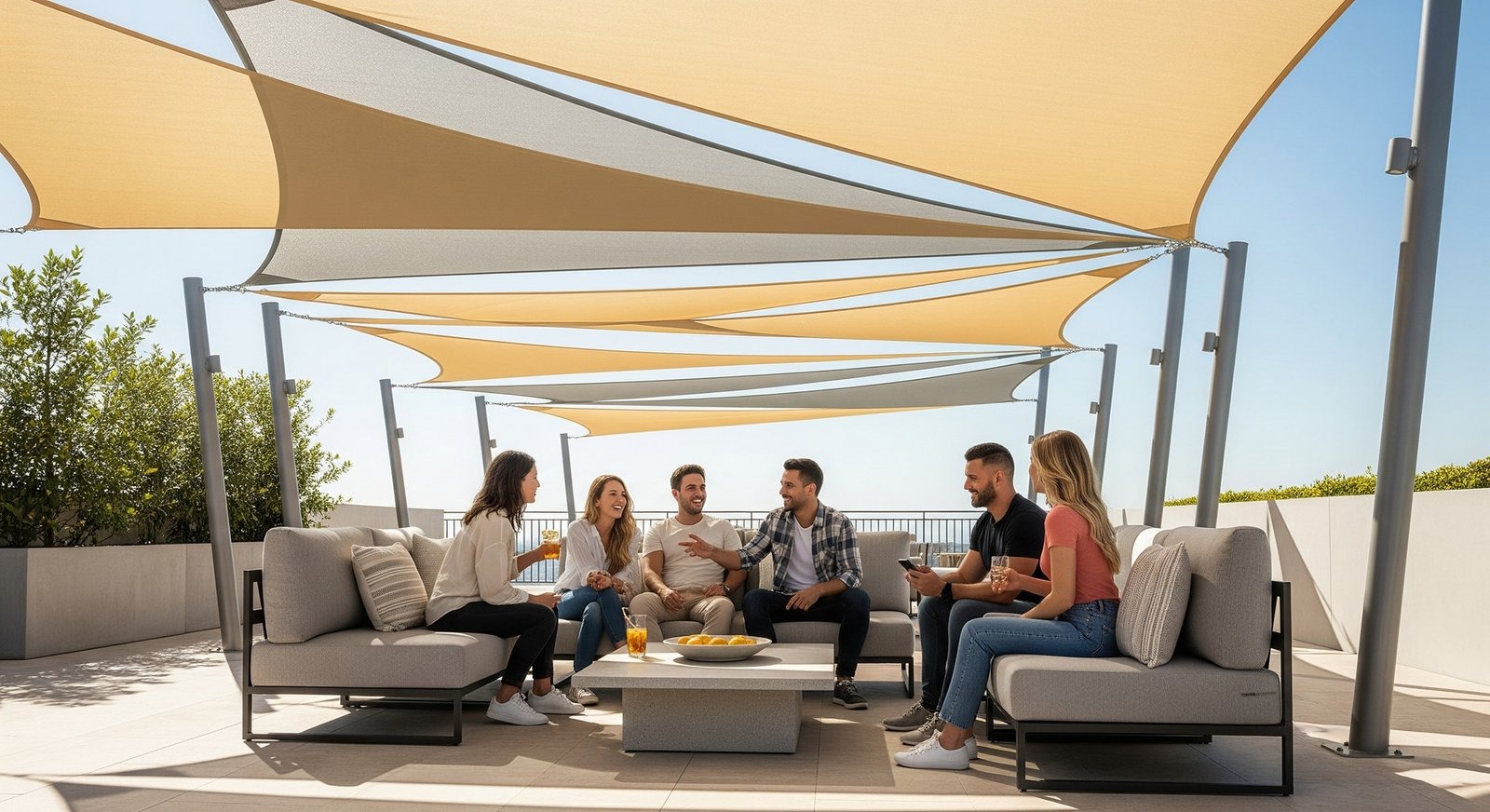
One triangular sail already works well, but using several together really solves uneven shade. Triangles are easy to overlap and combine in layers, building wide shade areas with interesting shapes. This modular approach lets you “build” shade exactly where you need it and adjust coverage as you go.
By hanging multiple sails at different heights and angles, you can:
- Cover a larger area.
- Create attractive light and shadow patterns.
- Extend shade over long or irregular zones.
This improves sun protection and also turns the sails into a design feature. This solution works especially well in large or complex spaces where one big roof or canopy would look too heavy or be too expensive. Layered sails give wide shade while keeping open views and a light, airy feel.
Why Are Triangular Shade Sails a Smart Solution?
Triangular shade sails are more than a passing fashion. They are a modern, efficient way to create outdoor shade, with many useful and visual benefits — especially when they are custom-made by experienced manufacturers like those behind https://shade4you.eu/. Their design solves many of the problems of older shade systems and offers better performance and more flexibility.
From easier installation to better strength in wind and rain, these sails are built to work well and look good. They fit into many building styles, from classic houses to modern terraces, improving the look of the space while giving strong, reliable shade.
Flexible Design for Varied Outdoor Spaces
Triangular sails are extremely flexible, which makes them suitable for many types of outdoor areas. You can use them on small city balconies, larger family gardens, or on restaurant terraces that don’t have a simple shape. They can sit neatly in corners or be stretched diagonally to cover tricky spots that square sails cannot reach easily.
This flexibility lets you shade specific features such as:
- Swimming pools
- Outdoor dining sets
- Playgrounds or sandpits
- Lounge and seating areas
You can choose the color, fabric type, size, and angle to match your style and the design of your home or business, so the sails look like a natural part of the space rather than an afterthought.
Easy Installation with Fewer Anchor Points
Another big advantage of triangular sails is how simple they are to put up. They need just three secure fixing points, which makes them easier and quicker to install than four-corner sails. This shortens the setup process and uses fewer materials.
Anchor points can be:
- Existing walls or posts
- Strong trees
- Pergolas or fences
- Newly installed metal or wooden poles
This simple setup appeals to people who like DIY. For bigger or more complex projects, getting a professional installer is a good idea to get correct tension and long-lasting results.
Appealing Visual Impact and Modern Style
Triangular shade sails also add a clear visual bonus. Their clean lines and sharp angles bring an instant modern touch to any outdoor area. Unlike square or rectangular sails, triangles break up straight roof lines and flat surfaces, drawing the eye and creating a striking focal point.
Because they can be used alone or in groups, they suit many locations: home gardens, café terraces, hotel pools, and event venues. You can arrange them in different ways to mirror the style of the building or create a bold contrast, adding character and personality to the space.
Improved Wind Resistance and Drainage
The triangle shape is also very practical in bad weather. With a smaller surface than many four-corner sails, triangular sails catch less wind, so they are better suited to exposed places such as roof terraces or coastal gardens. Choosing an air-permeable fabric like HDPE with reinforced corners and strong fixings increases their resistance even more.
Rainwater management is simpler too. A triangular sail is easy to set on a slope so that water runs off instead of collecting in the middle. By placing one corner lower than the others, rain drains away, reducing sagging, mold growth, and fabric damage. The stable structure of a triangle also keeps the edges tight, limiting wear along the sides.
What Are the Key Benefits of Triangular Shade Sails?
Triangular shade sails do much more than just block the sun. They offer a full set of benefits that improve how you use and enjoy your outdoor space. They help with comfort, looks, and long-term value, which makes them a smart choice for many homes and businesses.
Because they adapt easily to different layouts, cost less than many permanent structures, and can be used in sets, triangular sails stand out from common umbrellas and fixed awnings. They don’t just provide shade; they help you shape your outdoor life.
Customizable Coverage for Patios, Decks, and Gardens
Triangular sails are very adaptable, so they can give shade to many kinds of outdoor areas. You can:
- Make a small, cozy corner on a tiny patio.
- Cover a wide deck where several people sit.
- Protect gentle plants in a flower bed or vegetable patch.
They also work well above pools, children’s play spaces, and outdoor dining areas, offering strong UV protection and making these zones more comfortable and usable. With many sizes, colors, and fabrics available, you can match the sail to your furniture and garden design.
Space Efficiency for Small and Irregular Areas
In small or oddly shaped spaces, triangular sails can be especially helpful. Their three-point setup lets them fit into tight corners or over angled sections where a big rectangular sail wouldn’t fit or would feel too heavy. This means you can shade even tricky parts of your garden or balcony without wasting space or blocking movement.
Because the sails stay up high and don’t need poles in the middle of the seating area, they keep the ground clear and allow people to move freely while still being protected from the sun.
Cost-Effectiveness Compared to Other Shade Structures
Compared with permanent solutions such as pergolas, gazebos, or solid roofs, triangular shade sails usually cost much less. They need fewer materials, less building work, and less time to fit. Their tough fabric and simple hardware also mean lower maintenance costs over the years.
This makes them a good option for people who want reliable shade and a stylish look without paying for full construction work. You get a lot of shade and a modern appearance for a more modest budget.
Modular Options to Expand Shade as Needed
One standout feature of triangular sails is that you can easily add more later. You might start with one sail over a dining set, then add another over a lounge area once you see how well it works. You can place them:
- In a row over long terraces or walkways.
- Overlapping for layered shade and visual interest.
- At different heights for a three-dimensional effect.
This build-as-you-go setup means you can adjust your shade as your needs change, without replacing the whole system. It also gives you plenty of room to play with colors and shapes to create a unique design.
How to Select and Install a Triangular Shade Sail
Choosing and installing a triangular shade sail the right way is key for good performance, long life, and a nice look. The process includes some planning, basic measuring, and thoughtful design choices. Taking a bit of care at the start pays off for years.
You’ll need to pick suitable materials, choose safe fixing points, and understand how to tighten the sail correctly. Although the installation is usually straightforward, attention to detail helps you avoid sagging and early damage.
Choosing the Right Size, Fabric, and Color
Start by measuring the area you want to shade. Note the distances between possible anchor points and think about where the sun sits during the day so the sail will give good coverage.
Then decide on the fabric type. Common options include:
| Fabric Type | Main Features | Best For |
| HDPE (High-Density Polyethylene) | Breathable, strong, resists tearing and fading, blocks high levels of UV | Hot climates, areas where airflow and cooling are important |
| Waterproof polyester or similar | Repels rain, often coated, slightly warmer underneath | Places with frequent showers, where staying dry is a priority |
Next, pick the color. Light neutral colors like beige or light gray blend well with most gardens and reflect heat. Darker or brighter colors can turn the sail into a strong visual feature and look especially striking when you combine several sails in different shades.
Identifying Best Anchor Points and Tensioning
Strong anchor points are key for safety and stability. A triangular sail needs three firm supports, which can be:
- Solid brick or concrete walls
- Large, healthy trees
- Existing posts or pergola beams
- New steel or wooden posts set deep in concrete
New posts should lean slightly away from the sail’s center to counter the pulling force. Check that any structures you use are in good condition and can handle the load.
The sail should be pulled tight, but not overstretched. Good tension keeps the fabric stable, prevents flapping in the wind, and gives a clean, smooth appearance. Use quality fittings such as:
- Stainless steel D-rings at each corner
- Turnbuckles or tensioners to fine-tune tightness
- Durable rope or cable for secure attachment
Installation Steps: From Planning to Setup
Here is a simple outline of the setup process:
- Plan the layout: Mark where you want the shade, note sun direction, and choose the positions and heights of your anchor points. Remember to have at least one corner lower than the others for water runoff.
- Install the anchor hardware: Fix wall plates, eye bolts, or mount posts with concrete. Let concrete cure fully if using new posts.
- Attach the sail loosely: Connect each corner using shackles, ropes, or cables, leaving some slack.
- Tighten the sail: Gradually tighten each corner in turn until the fabric is firm and wrinkle-free. Adjust tension evenly on all sides.
- Final checks: Look for sags, make sure the slope is enough for drainage, and test all fixings for security.
Always read and follow the manufacturer’s guide, especially for recommended distances, mounting hardware, and safety advice. For larger sails or tricky structures, getting help from a professional installer can be a good choice. Also check any local rules or permit requirements before drilling or setting posts.
Tips for Combining Multiple Sails for Better Coverage
If you plan to use more than one sail, a bit of extra planning helps you get both good coverage and a great look:
- Map the sun path: Sketch where the sun falls at different times and place sails where they’ll be useful at key hours.
- Vary heights: Hanging sails at different levels creates depth and improves airflow.
- Overlap carefully: Overlapping edges increases shade but still allows some dappled light where you want it.
- Play with color: Use matching tones for a calm look or contrasting colors for a stronger visual effect.
- Avoid clutter: Leave clear gaps for walkways and views so the area doesn’t feel cramped.
Planning your sails this way lets you cover large or complex spaces with comfortable shade while keeping an open and stylish outdoor area.
Achieving Even Shade: Making the Most of Triangular Sails
The real strength of triangular shade sails is their ability to give smooth, even shade across an area, so you don’t get annoying hot patches. This comes from thoughtful design rather than simply hanging a piece of fabric.
By changing angles, heights, and overlap, you can build a system that “follows” the sun during the day. For example, one sail might cover your breakfast table in the morning, while a second, slightly higher sail covers a lounging space when the sun is overhead. By placing the sails with the sun’s daily path in mind, you get steady comfort without constant adjustments.
The flexible nature of these sails means you can create a custom solution for your exact space and habits. You decide where and when you want shade, then position the sails to match, instead of just reacting when an area gets too hot.
A well-planned layout with several triangular sails also looks impressive. The overlapping fabric, clean edges, and changing patterns of light and shade add character and style, turning your outdoor space into a place people enjoy looking at as much as they enjoy sitting in.
Maintaining and Caring for Your Triangular Shade Sail
To keep your triangular shade sail looking good and working well for many years, you’ll need some simple, regular care. These sails are made to last, but a little maintenance protects both the fabric and the fittings.
Regular cleaning and checks help avoid mold, mildew, and early wear, which can reduce both the look and the sun protection of your sail. A basic routine a few times a year is usually enough.
Routine Cleaning and Inspection
Clean your sail from time to time to remove dust, bird droppings, leaves, and pollution. This prevents staining and slow damage to the fibers.
Basic steps:
- Use a soft brush or broom to remove loose dirt and debris.
- For spots or marks, use mild soap and lukewarm water, then gently scrub with a soft brush.
- Rinse well with clean water to remove any soap residue.
- Let the sail air-dry completely before you tighten it again or store it.
While cleaning, look over the fabric and hardware for small tears, fraying, rust, or loose fittings. Fixing small problems early prevents bigger and more costly repairs later.
Preventing and Addressing Wear or Damage
Good setup and correct tension help avoid most damage. A sail that is too loose will flap in the wind, which can weaken the fabric and strain the fittings. Keep the sail nicely tight and re-check it after strong winds.
During storms, heavy snow, or very rough weather, it’s often better to take the sail down if it is not rated for such conditions. Store it safely and put it back up when the weather improves.
Deal with small rips or worn edges as soon as you notice them. Many suppliers sell repair kits, or you can ask a professional for larger jobs. Also check metal parts and anchor points regularly. Tighten any loose bolts and replace rusty hardware to avoid sudden failures.
Seasonal Care to Extend Service Life
If you live in a place with cold winters or long periods when you don’t use your outdoor space, consider taking the sail down for the off-season.
Before storing:
- Clean the sail and let it dry completely.
- Fold it loosely rather than crushing it into a tight ball.
- Store it in a dry, cool, ventilated place away from direct sunlight and pests.
At the start of the warm season, inspect and clean the sail again before reinstalling. With this simple seasonal routine, a good-quality triangular sail can last many years, often well over a decade, depending on the material and local climate.
Frequently Asked Questions about Triangular Shade Sails
As more people use triangular shade sails, they often have similar questions about where and how to use them, how they behave in wind, and how they compare with other shapes. Here are answers to some common questions to help you decide if they’re right for your outdoor area.
Can Triangular Shade Sails Be Used in Windy Environments?
Yes. Triangular sails are often a very good choice for windy spots. Their smaller surface area and angled sides let wind pass around them more easily than larger, flat shades, which reduces stress on the fabric and fixings.
For very windy locations such as seafront properties or open fields, consider:
- A breathable HDPE fabric that allows some air to flow through.
- Reinforced corners with strong stitching.
- High-quality hardware and deep-set posts.
Keep the sail well tensioned and check it after storms. This helps prevent flapping and keeps the system safe and durable.
Are They Suitable for Commercial Installations?
Yes, triangular shade sails work very well in commercial settings. They are widely used for:
- Café and restaurant terraces
- Hotel and resort pool areas
- Playgrounds and school yards
- Car parks and waiting areas
They offer good shade at a lower cost than many built structures and can be arranged in eye-catching shapes that attract attention and make spaces more inviting. They improve comfort for customers and staff while also protecting against UV rays.
How Do Triangular Sails Compare to Square or Rectangular Sails?
Each sail shape has strengths, but triangular sails offer some clear differences:
| Feature | Triangular Sails | Square/Rectangular Sails |
| Anchor points | 3 (simpler installation) | 4 or more (more planning needed) |
| Best use | Small/irregular spaces, layered designs | Large, regular areas needing uniform shade |
| Look | Modern, dynamic, strong visual impact | Clean, more traditional, symmetrical |
| Wind behavior | Often better in wind due to smaller area | Can catch more wind, needs stronger supports |
One square sail may give more solid coverage in a basic rectangle. However, several triangular sails can cover the same or even larger areas while adding style and flexibility. By combining them, you can create complex shapes and adjust coverage to suit the layout and use of your outdoor space.