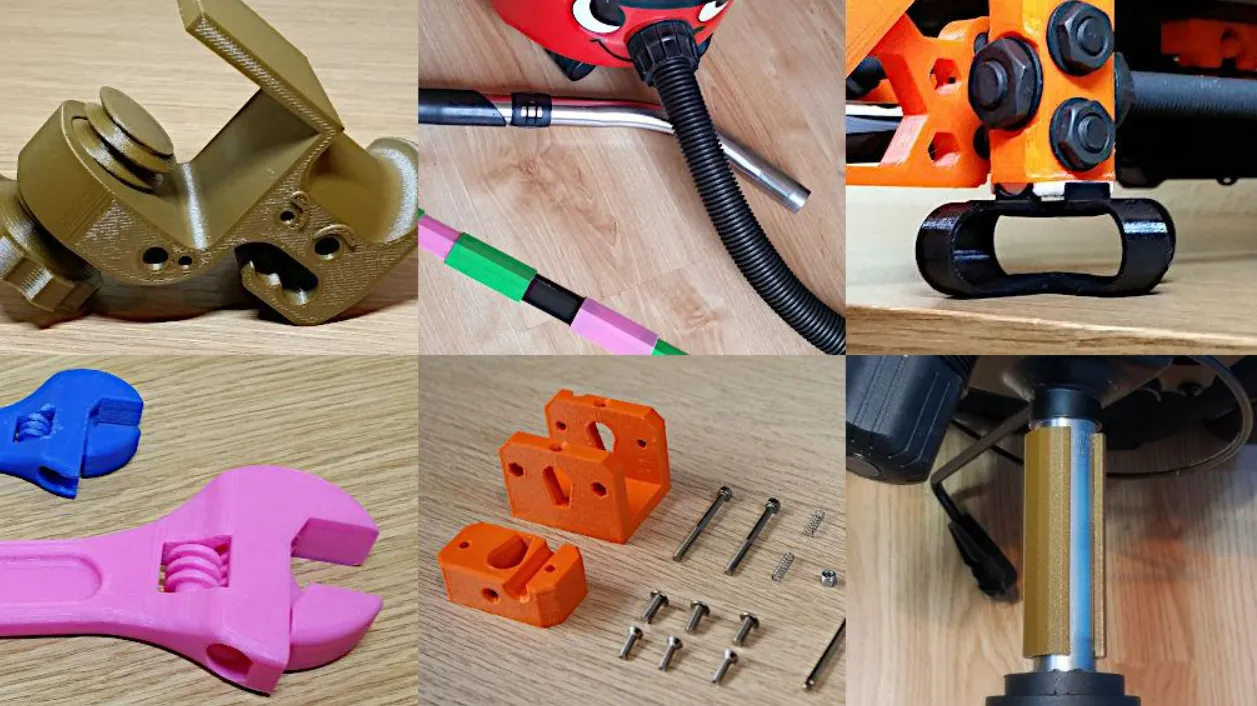
Bringing a brand new desktop 3D printer into your home is an incredibly exciting experience. For the first few weeks, it is entirely normal to be absolutely captivated by the machine’s ability to conjure complex shapes out of thin air. Beginners typically spend hours downloading and printing intricate dragons, articulated octopuses, miniature boats, and a vast assortment of desk toys. However, eventually, the sheer novelty of printing purely decorative plastic trinkets begins to wear off.
When this happens, many users mistakenly believe they have exhausted the utility of their machine, relegating it to gather dust in the corner of a room. In reality, they have only just scratched the surface. A desktop Fused Deposition Modeling (FDM) machine is not just a toy factory; it is a highly capable, precision micro-manufacturing plant. The true magic of this technology is unlocked when you realize you have the power to instantly manufacture custom, functional objects that solve real-world physical problems. Let’s explore the incredibly practical, everyday items you can start printing today to improve your living space, repair your broken appliances, and systematically organize your life.
Household Organization and Custom Storage
If there is one specific area where 3D printing absolutely excels, it is bringing meticulous order to household chaos. Standard, store-bought plastic bins and organizers rarely fit perfectly into our specific desk drawers, kitchen cabinets, or bathroom vanities. There is almost always wasted space or awkward gaps where items slide around. With desktop manufacturing, you can customize your storage solutions down to the exact millimeter.
Consider the wildly popular “Gridfinity” system. Designed by the maker community, Gridfinity is an open-source, highly modular grid framework that has completely taken the 3D printing world by storm. You simply print a flat baseplate that pressure-fits perfectly into the exact dimensions of your toolbox or desk drawer. Then, you print custom bins, tool holders, and sorting trays that snap magnetically or physically into that specific grid. It is the ultimate productivity and organization hack, allowing you to build a completely bespoke storage environment.
Beyond drawers, think about cable management. Instead of living with a tangled, frustrating mess of power wires under your computer desk or behind your television, you can print custom under-desk routing clips, headphone hangers, and power strip mounting brackets that screw directly into the underside of your furniture. You can even print gravity-fed AA and AAA battery dispensers that mount securely to the wall of your utility closet, ensuring you always know exactly how many batteries you have left at a single glance.
The Right Tool for the Job: Workshop and Garage Helpers
If you are a DIY enthusiast, a casual woodworker, an automotive mechanic, or just someone who likes to tinker in the garage on the weekends, your desktop 3D printer is about to become the most valuable tool in your workshop. You can easily print incredibly accurate measurement jigs, drill press guides, custom-contoured sanding blocks that match the exact curve of a restoration project you are working on, and custom wall-mounts for your heavy battery-operated power tools.
However, when printing load-bearing brackets, mechanical joints, or workshop tools, utilizing the proper raw material is absolutely vital to your success. Standard PLA plastic is fantastic for decorative items, but it is generally too brittle and heat-sensitive for heavy workshop use or outdoor applications. This is where you need to transition to engineering-grade materials. Choosing the right Filament—such as impact-resistant PETG, heat-resistant ABS, or even tough nylon blends—ensures your printed tools will survive being dropped on a concrete garage floor, exposed to harsh chemicals, or left in a hot car during the summer. With the correct material profile, your printed tools will easily rival the mechanical strength of commercially injection-molded counterparts.
The Power of Repair: Fixing Broken Appliances
We currently live in a disposable, throwaway culture. If the internal plastic dial on your washing machine snaps, or the tiny proprietary tracking wheel on your dishwasher’s bottom rack breaks off, the appliance manufacturer often expects you to buy an entirely new appliance—or at the very least, an overpriced replacement assembly that takes weeks to ship and costs a small fortune.
With a desktop printer and a cheap pair of digital calipers, you can measure the broken piece, recreate it in free CAD software like Tinkercad or Fusion360, and print a fully functional replacement part in less than an hour for just a few pennies worth of plastic. Makers around the world routinely print replacement hinges for heavy-duty coolers, custom vacuum cleaner adapter nozzles to fit specific power tools, replacement gears for food processors, and proprietary mounting clips for window blinds. Not only does this save you significant amounts of money over the lifespan of your household appliances, but it also actively keeps perfectly good, repairable machinery out of the local landfill. It puts the power of the “Right to Repair” directly back into your hands.
High-End Customization and Home Decor
It is important to note that functional, practical prints do not have to be ugly, blocky, or purely utilitarian. As you get more comfortable with 3D design and highly capable hardware, you can begin creating customized home decor that looks like it belongs on the shelf of a high-end design boutique rather than looking like a DIY science project.
This is particularly true if you decide to upgrade your manufacturing capabilities to advanced, multi-extrusion hardware. By utilizing a sophisticated Multi-color 3D printer, you can elevate your practical prints to a professional, retail-ready quality that is physically impossible to achieve with a standard single-nozzle machine.
With a multi-color IDEX system, you can manufacture sleek, two-toned geometric coasters for your living room coffee table, or custom nameplates for your home office door where the text is perfectly flush and integrated directly into the background color. If you have smart home devices like a Google Nest, an Apple HomePod, or an Amazon Echo, you can print beautifully designed, multi-color wall mounts or outlet hangers that perfectly match the exact color palette and aesthetic of your kitchen backsplash.
You can even design and print gorgeous, geometric self-watering plant pots for your indoor garden. Using a multi-color machine, you can instruct the printer to use an aesthetically pleasing matte or wood-filled material for the outer decorative shell, while simultaneously printing the inner waterproof lining and water reservoir out of a durable, watertight PETG.
Cultivating the Maker Mindset
Ultimately, transitioning from downloading pre-made internet toys to actively designing and printing functional household solutions requires a fundamental shift in perspective. In the 3D printing community, this is referred to as cultivating the “Maker Mindset.”
Once you embrace this mindset, the way you view the physical world around you will completely change. The next time a small plastic component in your house breaks, or the next time you find yourself deeply annoyed by a messy utility drawer, a poorly designed consumer product, or a lack of specific storage space, your first thought will no longer be, “Where can I go to buy a replacement?” Your immediate first thought will be, “How can I design and print a better solution myself?” That transition from consumer to creator is the true power of bringing a 3D printer into your home.