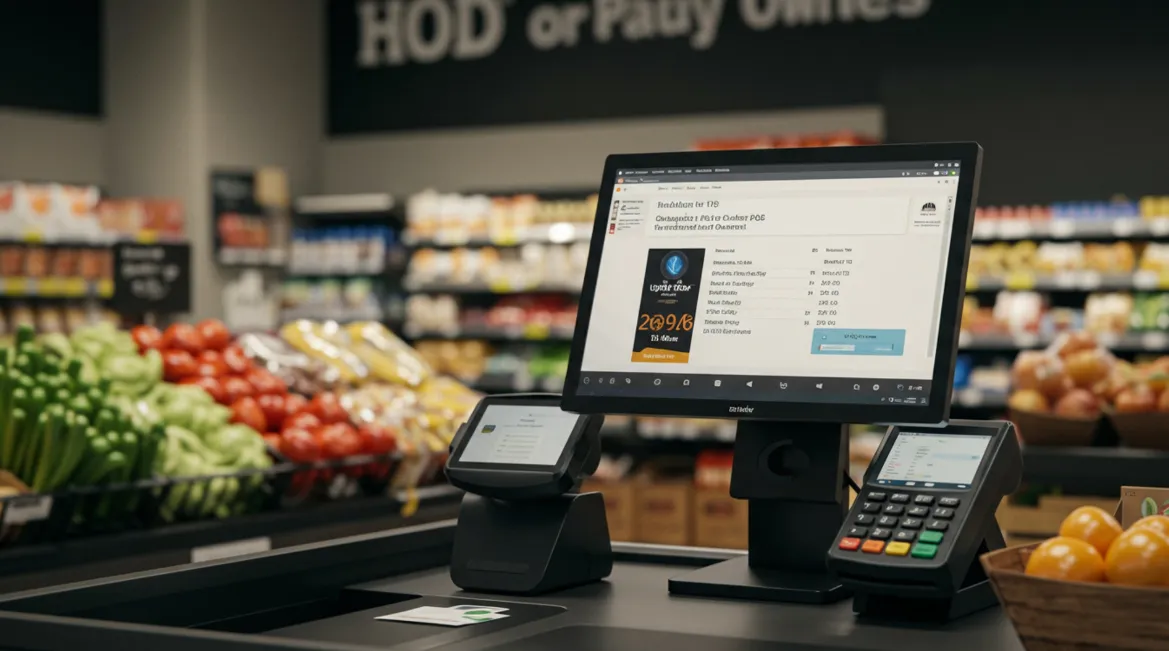
What is a Modern Supermarket POS System? Beyond Simple Transactions
Contemporary POS systems represent far more than upgraded cash registers. They constitute the operational nervous system connecting and coordinating all aspects of supermarket functioning.
Managing a modern supermarket demands orchestrating countless operational elements simultaneously. From the moment customers enter through automatic doors until final financial reconciliation, every process must function smoothly, execute accurately, and deliver value. Supermarkets balance complex inventory networks, time-sensitive perishable goods, fluctuating customer demand, competitive pricing pressures, and staff coordination across all these dimensions.
Traditional approaches relying on standalone cash registers, separate inventory systems, and disconnected accounting tools created operational silos and inefficiencies. Today’s customers expect rapid checkout experiences, personalized shopping offers, and seamless payment processing. Staff need technology enabling them to focus on customer service rather than administrative busywork. Modern supermarkets require integrated solutions bridging these operational gaps.
SmartPaymentSolutions understands that successful supermarkets need more than transaction processing—they need operational transformation. Our comprehensive POS solutions address the unique complexity of grocery retail by consolidating critical functions into unified platforms designed specifically for supermarket environments.
The Contemporary Supermarket Challenge: Understanding Modern Retail Pressures
Supermarkets occupy unique positions in retail, serving as community anchors and economic drivers while facing relentless operational demands.
The Supermarket Operating Reality
Complex Operational Demands
Modern supermarkets simultaneously manage:
- Massive inventory volumes (10,000+ distinct SKUs for typical supermarkets)
- Perishable goods requiring temperature control and expiration monitoring
- Rapid inventory turnover with daily deliveries and stock rotation
- Multi-department operations (produce, meat, dairy, grocery, deli, pharmacy)
- Staff coordination across multiple shifts
- Competitive pricing requiring constant market monitoring
- Customer expectations for technology-enabled shopping experiences
Evolving Customer Expectations
Contemporary grocery shoppers demand:
- Rapid Checkout: Impatient with delays in payment processing
- Payment Flexibility: Expecting multiple payment method options
- Personalized Experience: Wanting relevant offers and loyalty rewards
- Transparency: Seeking clear pricing and promotional information
- Convenience: Preferring self-checkout and mobile payment options
- Sustainability: Caring about waste reduction and ethical sourcing
Staff Productivity Requirements
Team members need:
- Efficient Tools: Technology reducing mundane administrative tasks
- Clear Information: Access to product details and pricing without manual lookup
- Empowerment: Ability to handle transactions, returns, and issues independently
- Fair Compensation: Accurate time tracking and performance-based incentives
- Training Support: Systems easy enough to master quickly
The Cost of Operational Inefficiency
Legacy systems create significant financial and operational drains:
Data Fragmentation
- Sales information trapped in register systems
- Inventory data isolated in separate management software
- Customer information scattered across multiple platforms
- Financial records requiring manual reconciliation
- Inability to see unified business performance
Error Accumulation
- Manual price lookups causing checkout delays and errors
- Inventory count discrepancies requiring time-consuming audits
- Pricing inconsistencies between systems and shelf tags
- Data entry mistakes cascading through financial records
- Receipt errors frustrating customers
Operational Bottlenecks
- Slow checkout processing creating customer frustration
- Manual inventory updates occurring infrequently (weekly rather than real-time)
- Promotional management requiring intensive staff coordination
- Stock decisions based on guesswork rather than data
- Inability to identify trending products or slow movers
Lost Financial Opportunities
- Missed promotional effectiveness from inability to track results
- Overstocking driving waste and capital inefficiency
- Understocking causing lost sales and customer frustration
- Inability to identify profitability by product or department
- Customer loyalty potential left unrealized
System Components and Architecture
Physical Hardware Infrastructure
- Checkout Terminals: Touchscreen displays enabling rapid transaction processing
- Barcode Scanning Equipment: High-speed scanners capturing product information instantly
- Receipt Printers: Generating customer receipts and transaction documentation
- Cash Drawers: Secure cash storage with automated locking mechanisms
- Card Readers: Processing credit cards, debit cards, and contactless payments
- Display Screens: Customer-facing screens showing item prices and totals
- Back-Office Equipment: Printers and displays for managerial functions
Software Intelligence Layer
- Transaction Processing Engine: Managing sales and payment processing
- Inventory Management: Real-time stock tracking and automated reordering
- Customer Relationship Management: Loyalty programs and customer data
- Employee Management: Time tracking and performance monitoring
- Reporting and Analytics: Data transformation into actionable insights
- Integration Platform: Connecting with accounting, e-commerce, and third-party systems
Network and Data Infrastructure
- Cloud-Based Architecture: Secure data storage and automatic backup
- Real-Time Synchronization: Data flowing instantly across all terminals
- Offline Capability: Continued operation during connectivity interruptions
- Security Protocols: Encryption and compliance with payment processing standards
- Scalability Infrastructure: Supporting growth from single location to multi-store chains
The Transformation from Register to Strategic Platform
Traditional cash registers simply record transactions. Modern POS systems transform that transaction data into operational intelligence while automating countless supporting processes.
Data Integration
Every transaction becomes data feeding into:
- Inventory management (automatic stock updates)
- Financial reporting (revenue and cost tracking)
- Customer analytics (purchasing patterns)
- Staff performance (transaction monitoring)
- Promotional effectiveness (measuring campaign results)
Process Automation
Manual tasks become automated:
- Inventory reordering (based on preset thresholds)
- Promotional application (automatic discount calculations)
- Financial reconciliation (end-of-day closing)
- Customer communication (loyalty point awards)
- Compliance reporting (regulatory documentation)
Intelligence Generation
Raw data transforms into business intelligence:
- Which products drive profitability
- When peak customer traffic occurs
- What promotional strategies succeed
- Which inventory locations need attention
- How individual staff members perform
Streamlining Operations: How Modern POS Systems Simplify Supermarket Functioning
1. Revolutionizing Checkout Velocity and Customer Experience
The checkout counter represents the final customer touchpoint—making this experience exceptional influences long-term loyalty and reputation.
Traditional Checkout Challenges
Legacy systems created bottlenecks:
- Manual price lookups for items without barcodes
- Slow barcode scanning requiring second attempts
- Single-method payment processing
- Lengthy discount application procedures
- Tedious return and exchange processing
Modern POS Solutions
SmartPaymentSolutions POS systems eliminate these friction points:
Lightning-Fast Scanning Technology
- High-speed barcode readers capturing product information instantly
- Image recognition technology reading damaged or partially obscured barcodes
- Automatic product lookup providing instant pricing and availability
- Real-time verification preventing wrong-item scanning
Produce and Weight-Based Item Processing
- Price Look-Up (PLU) code system enabling rapid vegetable and fruit identification
- Automatic weight-based pricing for items sold by pound
- Preset quantities for common items (dozens of eggs, 3-pound bags)
- Quick override options for manual entry when needed
Comprehensive Payment Method Support
- Credit card processing across all major networks
- Debit card acceptance with EMV chip technology
- Contactless payment (NFC) for tap-to-pay transactions
- Mobile wallet integration (Apple Pay, Google Pay, Samsung Pay)
- Gift card and store credit acceptance
- Multiple payment combinations in single transactions
Efficient Return and Exception Handling
- Rapid item void processing for scanning errors
- Streamlined return procedures with automatic receipt lookup
- Simple promotional verification for manufacturer coupons
- Quick manager override capabilities for special situations
- Transaction history enabling item lookups for customers
Speed Performance Impact
- Transaction Time Reduction: Average transaction completion drops from 2-3 minutes to 45-90 seconds
- Checkout Line Management: Faster processing enables fewer registers during slow periods
- Customer Satisfaction: Reduced wait times correlate directly to improved satisfaction scores
- Staff Efficiency: Cashiers complete more transactions per shift with fewer errors
Real-World Scenario
A 50-item grocery transaction previously required:
- Manual price lookups for 5-8 items (3-5 minutes)
- Manual coupon verification (1-2 minutes)
- Slow payment processing (1-2 minutes)
- Receipt printing and bagging (1-2 minutes)
- Total: 6-11 minutes
Modern POS system:
- Rapid barcode scanning (2-3 minutes)
- Automatic coupon verification (10 seconds)
- Fast payment processing (15-30 seconds)
- Receipt printing and bagging (1-2 minutes)
- Total: 3.5-5.5 minutes
This time reduction multiplied across hundreds of daily transactions dramatically improves customer experience and operational efficiency.
2. Real-Time Inventory Mastery and Stock Optimization
Inventory management represents one of supermarket’s most complex and costly operational challenges. Modern POS systems transform inventory from guesswork to precision management.
Traditional Inventory Problems
Legacy approaches created constant challenges:
- Stock counts updated weekly or monthly (not real-time)
- Constant stockouts of popular items disappointing customers
- Excessive overstocking of slow movers consuming shelf space and capital
- Spoilage and waste from untracked perishable goods
- Inability to identify which products drive profitability
- Manual counting processes consuming staff time
- Ordering decisions based on habit rather than data
Modern POS Inventory Solutions
SmartPaymentSolutions systems provide unprecedented inventory control:
Automatic Inventory Updates
- Every checkout transaction immediately deducts sold items from inventory
- Real-time stock levels visible across all locations
- Accurate inventory reflecting current physical reality
- No end-of-day reconciliation delays before accurate data availability
Intelligent Reordering Mechanisms
- Customizable low-stock threshold alerts
- Automatic reorder point triggering when inventory reaches preset levels
- Reorder recommendations based on sales velocity and shelf space
- Supplier integration enabling direct ordering from system
- Purchase order generation automating procurement
Perishable Goods Management
- Expiration date tracking for all perishable items
- First-in-first-out (FIFO) enforcement ensuring older stock sells first
- Approaching-expiration alerts enabling markdown strategy
- Automatic removal of expired items from shelves
- Waste tracking reporting highlighting spoilage issues
Lot and Batch Tracking
- Recall management systems for food safety incidents
- Supplier tracking for quality and pricing performance
- Product rotation optimization preventing waste
- Date-based purchasing enabling freshness guarantees
- Traceability for customer confidence
Bundle and Promotional Management
- Automatic stock deduction for multi-item bundles
- Promotion component tracking preventing stockouts
- Loss-leader impact analysis on profitability
- Volume discount calculations based on current inventory
- Cross-item promotion effectiveness measurement
Advanced Analytics
- Stock Turnover Rates: Identifying fast movers and slow inventory
- Shrinkage Tracking: Quantifying and investigating inventory losses
- Dead Stock Identification: Finding products that aren’t selling
- Inventory Valuation: Accurate financial reporting of inventory assets
- Seasonal Demand Patterns: Preparing for predictable fluctuations
Financial Impact of Inventory Optimization
Improved inventory management delivers substantial financial benefits:
- Reduced Holding Costs: Overstocking ties up capital and requires storage space; optimized inventory frees both
- Minimized Waste: Accurate tracking prevents spoilage and expired goods
- Improved Cash Flow: Faster inventory turnover means quicker conversion of purchases to sales
- Better Profitability: Accurate tracking identifies which products drive margins
- Reduced Stockouts: Never running out of popular items preserves sales and customer satisfaction
Case Study Impact
A typical 30,000-square-foot supermarket managing 12,000 SKUs might see:
- Inventory reduction of 10-15% through elimination of excess stock
- Waste reduction of 20-30% through better expiration management
- Working capital improvement of $50,000-$100,000
- Stock turnover improvement of 15-20%
- Customer stockout reduction of 30-40%
4. Dynamic Pricing and Promotion Management
Effective promotions drive sales but managing them manually creates complexity and errors. Modern POS systems automate promotional management.
Traditional Promotional Challenges
Legacy approaches created operational complications:
- Manual price changes required shelf tag updates
- Promotional inconsistencies across locations
- Cumbersome coupon validation processes
- Inability to measure promotional effectiveness
- Difficulty implementing complex promotions
- Last-minute promotional changes requiring staff coordination
Modern Promotion Management Capabilities
SmartPaymentSolutions systems provide sophisticated promotional tools:
Dynamic Pricing Implementation
- Real-Time Price Updates: Immediate price changes across all terminals
- Scheduled Pricing: Time-based price changes activating automatically
- Location-Based Pricing: Different pricing at different store locations
- Tiered Pricing: Price variations based on customer tier or purchase quantity
- Competitive Pricing: Rapid response to competitor price changes
Promotional Campaign Types
- Percentage Discounts: Fixed percentage reductions applied automatically
- Dollar Amount Discounts: Fixed dollar reductions at checkout
- Buy-One-Get-One (BOGO): Free or discounted secondary item with purchase
- Bundle Deals: Discounted pricing for multi-item combinations
- Volume Discounts: Pricing breaks based on quantity purchased
- Loyalty-Exclusive Offers: Special pricing limited to loyalty members
- Seasonal Promotions: Holiday or seasonal campaign management
Promotional Mechanics
- Automatic Application: Discounts calculate and apply automatically at checkout
- Manual Override: Capability for manager-approved exceptions
- Coupon Integration: Manufacturer and store coupon validation
- Digital Coupons: Mobile app coupon delivery and redemption
- Shelf Tag Integration: Automatic price labels matching POS pricing
Campaign Effectiveness Measurement
- Sales Lift Analysis: Measuring revenue increase from promotions
- Margin Impact: Understanding promotion profitability after discounts
- Customer Response: Tracking which customers take advantage of offers
- Inventory Impact: Measuring stock reduction from promotional activity
- Comparative Analysis: Comparing promotion effectiveness across time periods
Promotional ROI Optimization
- Profitability Analysis: Identifying promotions driving profit
- Underperforming Elimination: Discontinuing ineffective campaigns
- Timing Optimization: Identifying optimal promotional timing
- Frequency Analysis: Understanding promotional response curves
- Customer Segmentation: Targeting promotions to responsive segments
Competitive Impact
Modern promotional management enables:
- Market Responsiveness: Rapid adjustment to competitive promotional activity
- Margin Protection: Focusing discounts on high-margin products
- Customer Retention: Strategic promotions on customer-preferred products
- Traffic Building: Promotional calendar driving consistent customer visits
Season Optimization: Maximizing seasonal demand variations